

In today’s interconnected environment, securing your network perimeter is non-negotiable. While commercial solutions abound, the firewall open source ecosystem offers powerful, flexible, and transparent alternatives for businesses, home labs, and even complex IoT projects. These community-driven projects provide robust security features without the hefty price tag or vendor lock-in, giving you complete control over your network’s defences.
However, navigating this landscape requires careful consideration of features, hardware compatibility, and available support models. When beginning your search for a ‘digital guardian,’ it’s helpful to review guides on choosing the Best Firewalls For Small Business to understand the landscape and various solutions available. This curated comparison delves deeper into the open-source world, analysing the top distributions, appliance vendors, and cloud offerings.
This guide is designed to help you make an informed decision and build a resilient security posture. We will examine each option with practical examples, screenshots, direct links, and clear use-case analysis. For instance, we’ll see how a small office can use OPNsense for basic security, while a globally distributed network might leverage VyOS for advanced routing and firewalling, providing critical insights to help you select the right tool for your specific requirements.
1. OPNsense
OPNsense is a high-performance, open-source firewall and routing platform based on FreeBSD. It stands out for its modern, clean web-based user interface, which simplifies complex network configurations. The project prioritises security with frequent, reliable updates and a transparent development roadmap, making it a dependable choice for both small businesses and large enterprise networks.
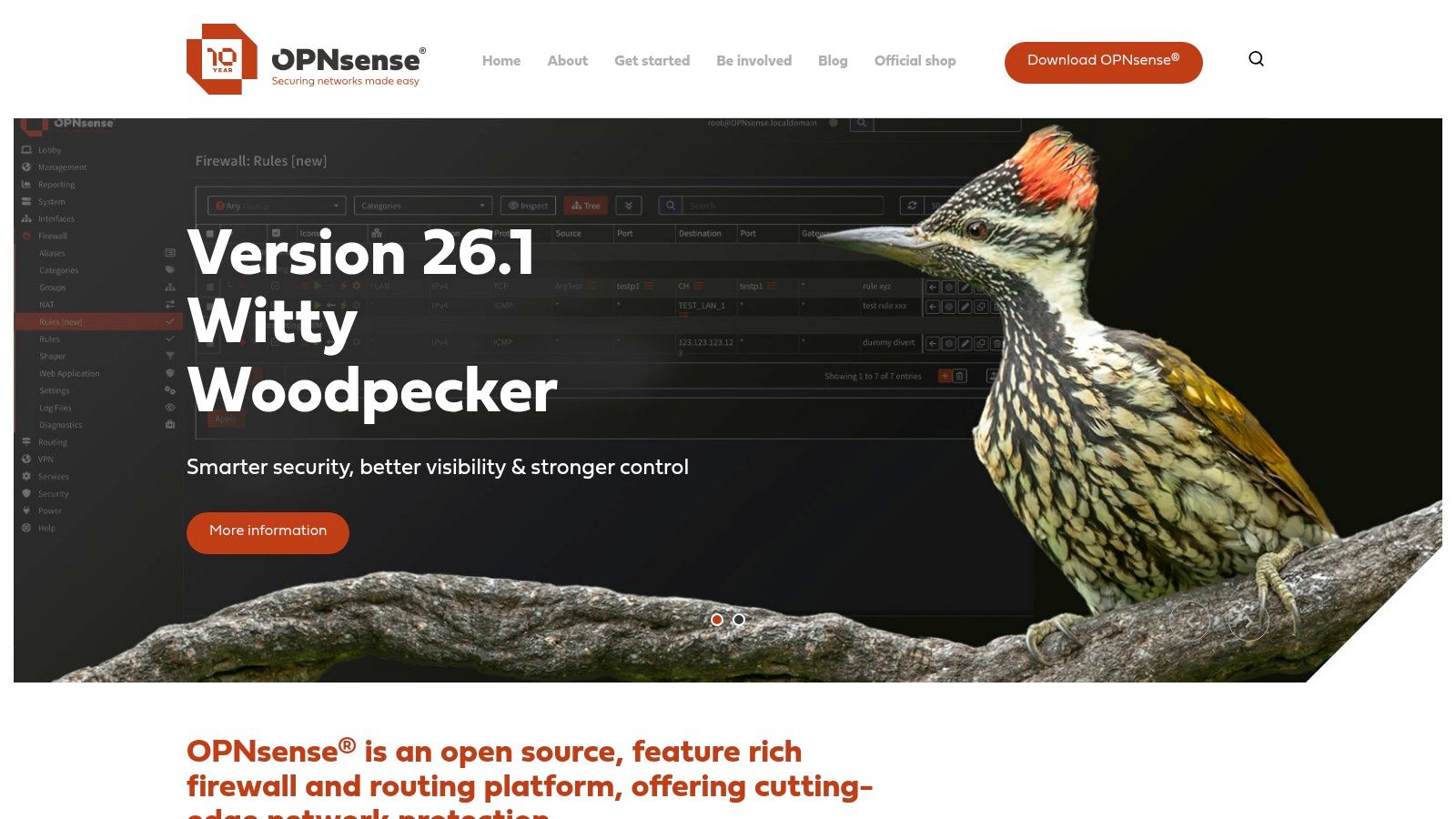
It offers a rich feature set straight out of the box, including stateful inspection, traffic shaping, and robust VPN support for IPsec, OpenVPN, and WireGuard. What makes OPNsense a premier firewall open source solution is its extensive plugin ecosystem. This allows users to add advanced functionalities like intrusion detection/prevention (IDS/IPS) using Suricata, web filtering, and more. As a practical example, an IoT device manufacturer could deploy OPNsense on an embedded device, using its traffic shaping rules to prioritise critical sensor data over firmware updates and enabling the Suricata IDS plugin to monitor for malicious traffic patterns specific to its network.
For organisations needing advanced features and professional support, OPNsense offers a paid Business Edition which includes a Web Application Firewall (WAF) and the OPNcentral centralised management tool. While the community version is free, this commercial tier provides enterprise-grade capabilities. Integrating its logs with other security tools is straightforward, which can be a key part of a comprehensive security posture, much like using open-source SIEM solutions for centralised threat monitoring.
Website: https://opnsense.org/
2. OPNsense Official Shop (Deciso)
For organisations seeking a streamlined deployment, the official OPNsense Shop, run by Deciso, provides purpose-built hardware appliances made in the EU. This shop is the ideal starting point for businesses that want a turnkey solution, combining the powerful OPNsense software with hardware optimised for performance and reliability. It simplifies procurement, especially for EU-based companies, by handling VAT and offering local fulfilment from the Netherlands.
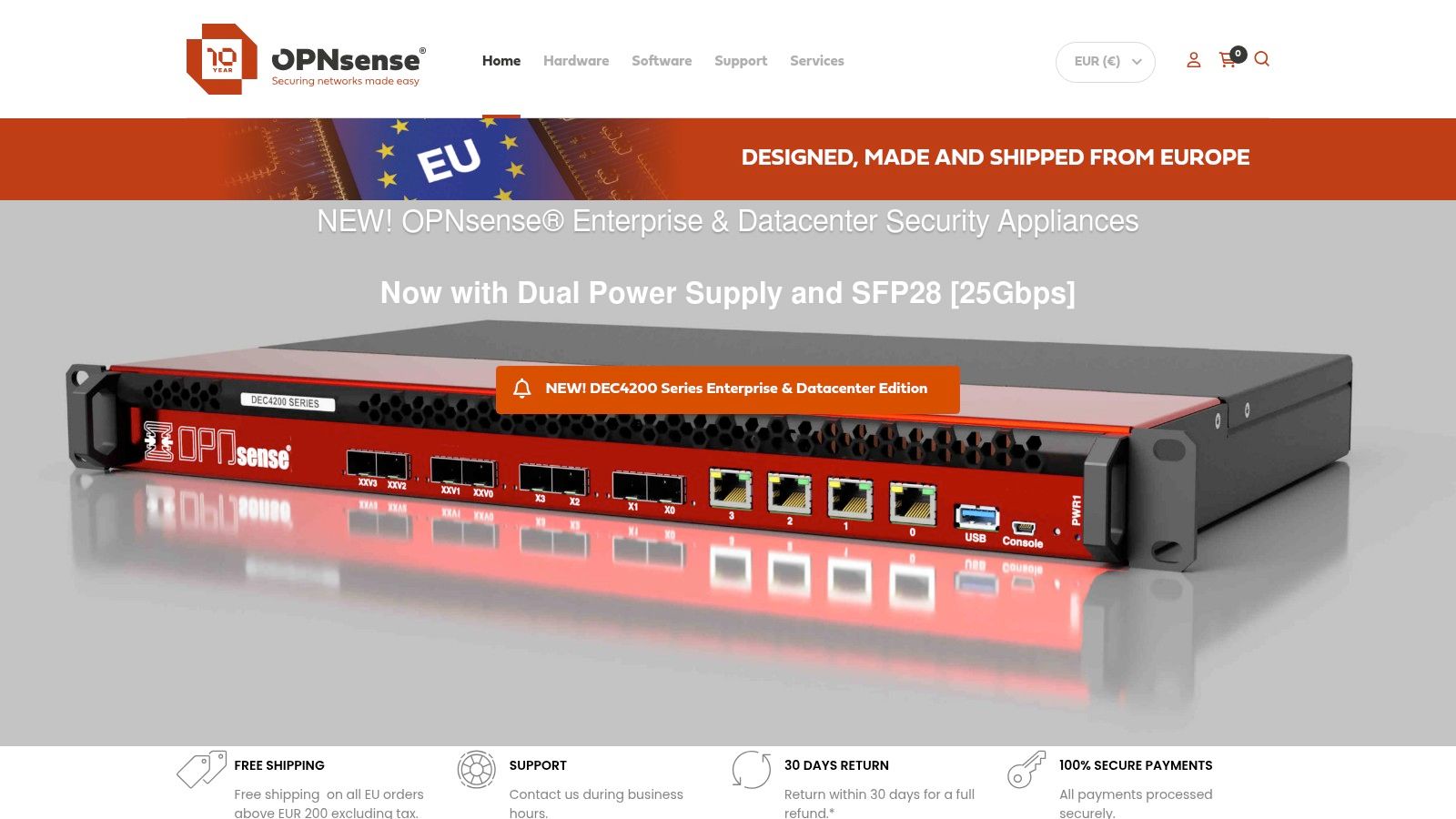
The offerings range from compact desktop units to powerful rack-mounted servers with 2.5GbE and 10GbE SFP+ ports. This makes it a great firewall open source hardware path for diverse use cases, from a small office needing a reliable gateway to an enterprise data centre requiring high-throughput traffic inspection. As a practical example, a Spanish manufacturing firm could purchase a rack appliance directly, knowing it’s engineered for OPNsense and includes a 30-day return policy. This removes the guesswork of sourcing compatible third-party hardware, allowing them to quickly deploy a firewall to segment their factory floor network from their corporate IT network.
While the hardware carries a premium price compared to generic x86 boxes, the value comes from official support and guaranteed compatibility. The shop is also where users can purchase Business Edition licences, which unlock advanced features and professional support bundles. This integrated hardware and software approach ensures stability and provides a single point of contact for assistance, a crucial factor for production environments.
Website: https://shop.opnsense.com/
3. pfSense Community Edition
pfSense Community Edition (CE) is one of the most established and widely trusted open-source firewall distributions. Based on FreeBSD, it has built a reputation for stability, maturity, and a vast feature set that caters to everyone from home lab enthusiasts to complex enterprise environments. Its web-based interface, while more traditional than some rivals, provides comprehensive control over its powerful stateful firewalling, routing, and VPN capabilities.
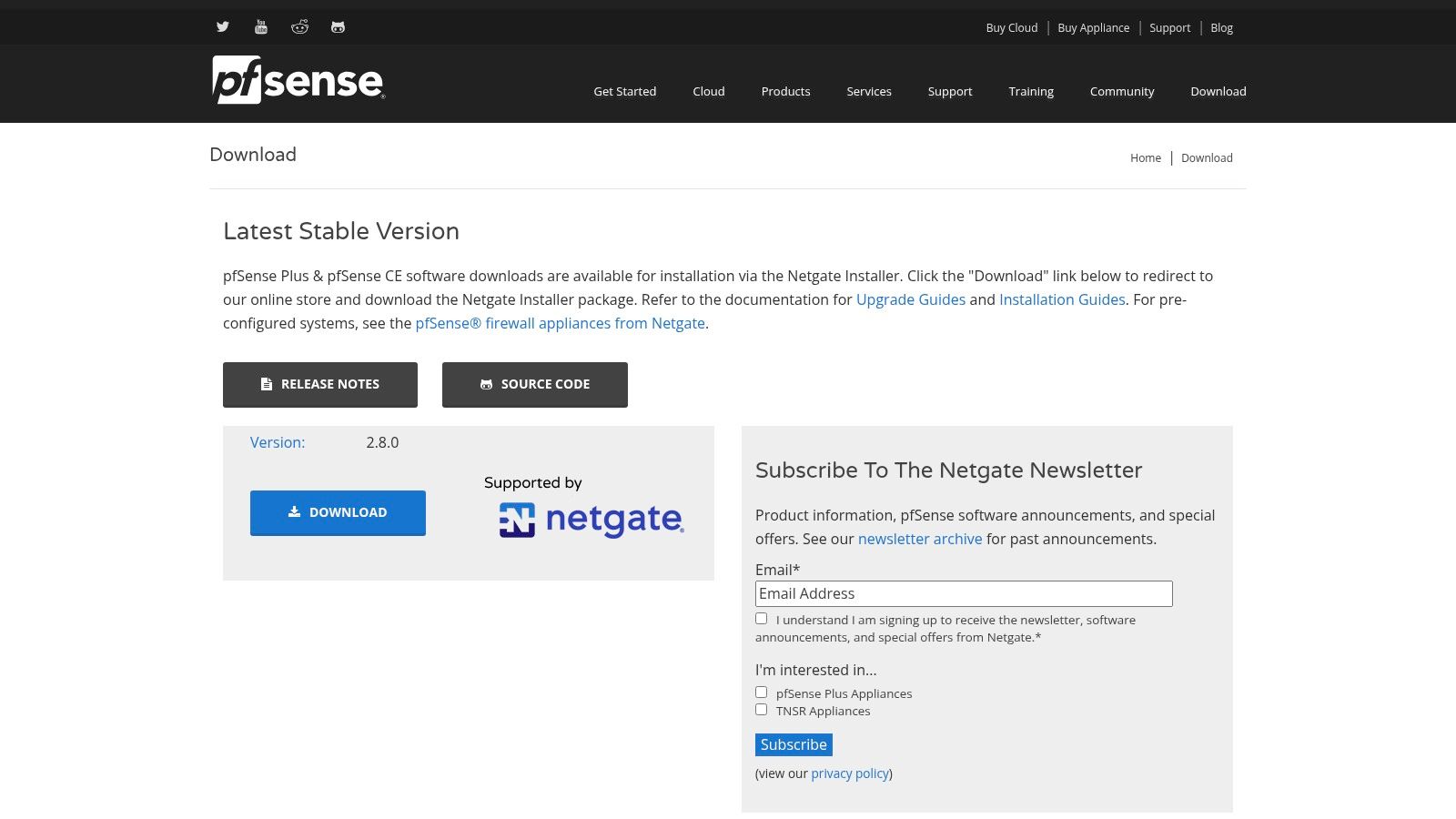
What truly defines pfSense CE as a leading firewall open source solution is its extensive package ecosystem and massive community. This allows for deep customisation through add-ons for services like IDS/IPS (Suricata or Snort), proxy filtering, and dynamic DNS. For a practical example, a small business could deploy pfSense CE on affordable hardware, use its robust OpenVPN server for secure remote access, and install the pfBlockerNG package to block malicious ad networks and known threats. This level of flexibility on commodity hardware is a significant advantage.
Maintained actively by its commercial sponsor, Netgate, pfSense CE receives regular security updates and feature enhancements. This commitment to ongoing development is a critical part of a secure software development life cycle. While free to use on your own hardware, users should note that the installer requires an online connection, and some advanced configurations benefit from familiarity with its well-documented but extensive system.
Website: https://www.pfsense.com/download/
4. Netgate Store (pfSense Plus appliances)
For organisations seeking a professional, turnkey solution built upon a leading open-source project, the Netgate Store is the official commercial outlet for pfSense. It offers a range of hardware appliances preloaded with pfSense Plus software, the commercially supported version of the project. This approach combines the power and flexibility of a firewall open source core with the reliability of dedicated, purpose-built hardware and professional support tiers.
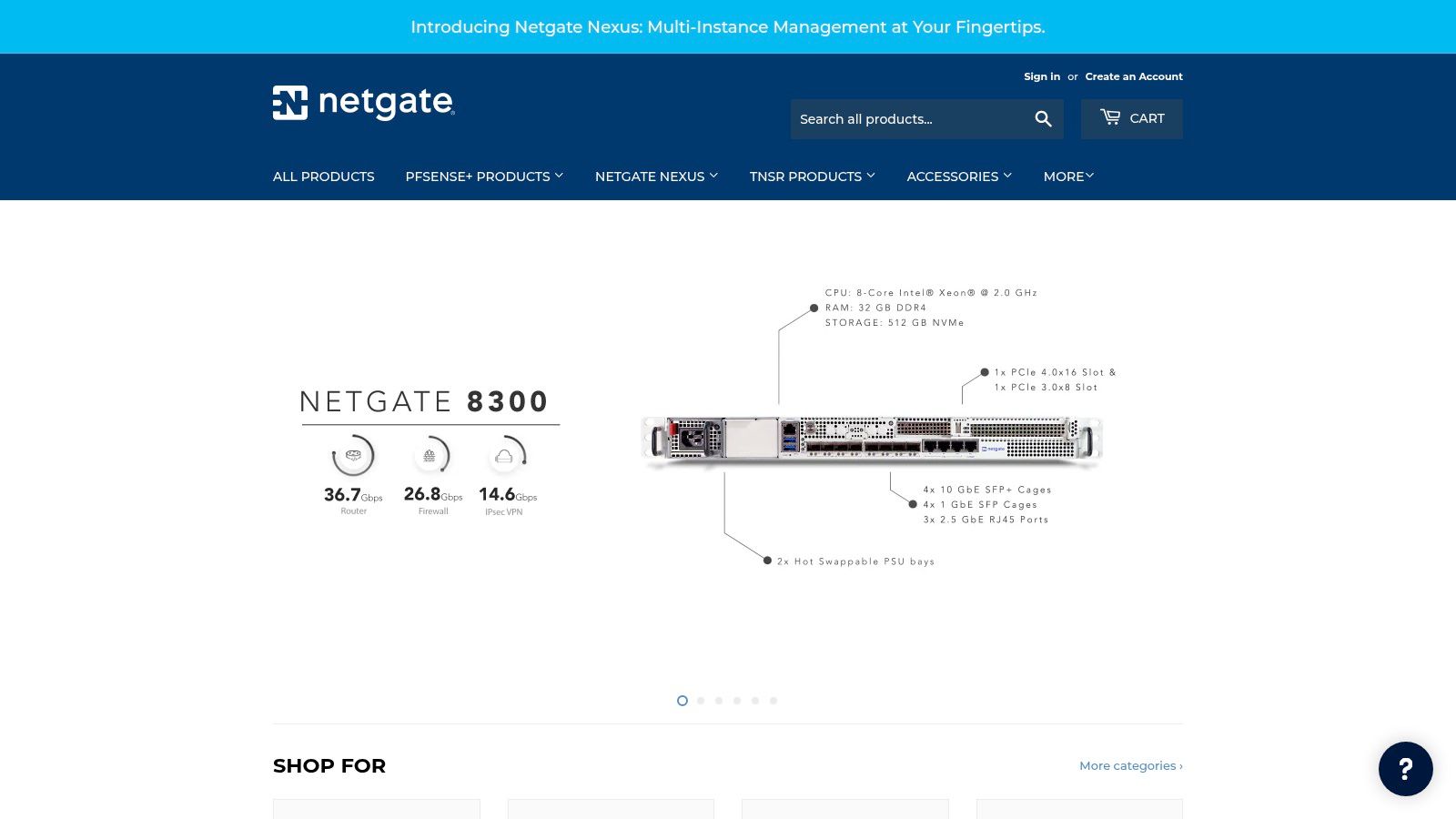
The store features a variety of SKUs, from the compact Netgate 1100 for small office/home office (SOHO) deployments to the powerful 8200 for enterprise-level use. A key advantage is purchasing a pre-vetted, optimised system that includes pfSense Plus and access to TAC (Technical Assistance Center) support. As a practical example, a medical device manufacturer could deploy a Netgate 4200 appliance to segment its production network, confident that the hardware and software are fully integrated and that they can call TAC support if a critical firewall rule fails. This support is crucial for addressing vulnerabilities, which can be tracked through resources like the National Vulnerability Database.
While this provides a streamlined procurement path with global shipping, it’s important to carefully match the appliance’s specifications to the intended workload. Some community feedback suggests entry-level models may have performance limitations under heavy load, so assessing your throughput and feature requirements is essential before purchasing.
Website: https://shop.netgate.com/
5. AWS Marketplace – pfSense Plus
For organisations already invested in the AWS ecosystem, deploying a firewall directly from the AWS Marketplace offers a seamless, integrated experience. Netgate provides a pay-as-you-go pfSense Plus AMI (Amazon Machine Image), enabling the rapid deployment of a robust firewall solution with hourly billing. This approach eliminates the need for managing separate hardware, allowing teams to launch and configure a powerful firewall in minutes, directly within their cloud environment.
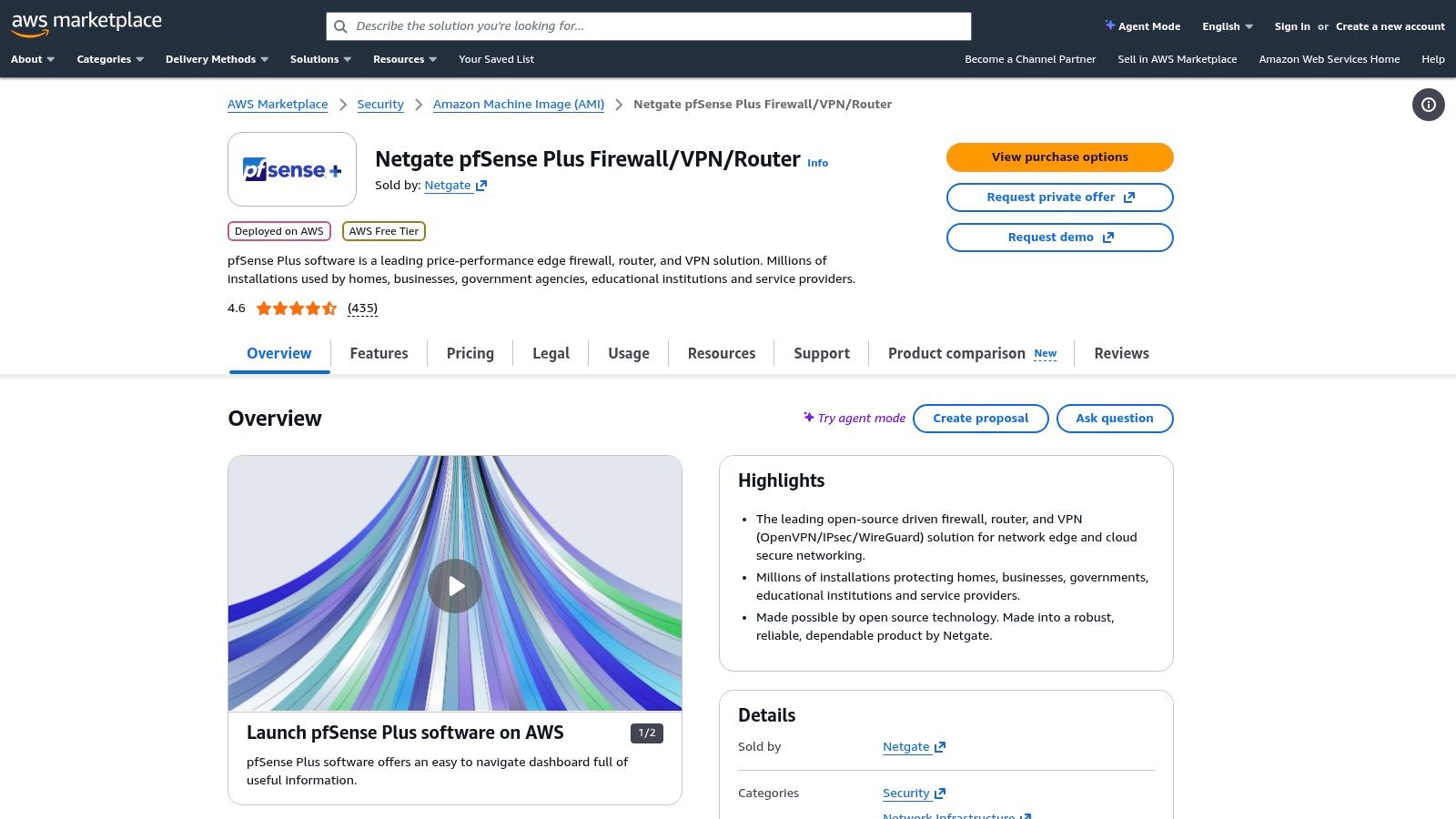
This platform is ideal for cloud-native workloads, providing a versioned marketplace listing that supports various instance types, including ARM/Graviton for cost and performance optimisation. Its key strength is speed of deployment, making it perfect for temporary proofs of concept or scaling security alongside fluctuating cloud demands. For a practical example, a development team could spin up a pfSense Plus instance to secure a temporary staging environment for a new application. They can then configure strict firewall rules to allow access only from their office IP, test the application, and tear down the firewall instance once testing is complete, paying only for the hours used.
While the integration with AWS billing simplifies accounting, users must be mindful of the cost structure. The software’s hourly fee is an additional charge on top of the underlying AWS instance, networking, and data transfer costs. Despite this, its convenience and the availability of high-availability (HA) configurations across different zones make it a compelling firewall open source option for securing critical cloud infrastructure without significant upfront investment.
Website: https://aws.amazon.com/marketplace/pp/prodview-gzywopzvznrr4
6. Microsoft Azure Marketplace – pfSense Plus
For organisations building their infrastructure within Microsoft’s cloud, the Azure Marketplace offers a streamlined path to deploy pfSense Plus. This isn’t a standalone project but rather a pre-configured, optimised image of the powerful pfSense Plus software, ready for direct deployment on Azure virtual machines. This simplifies the setup process immensely, providing a reliable and supported firewall open source solution that integrates natively with Azure’s ecosystem, including Virtual Networks (VNets) and VPN Gateways.
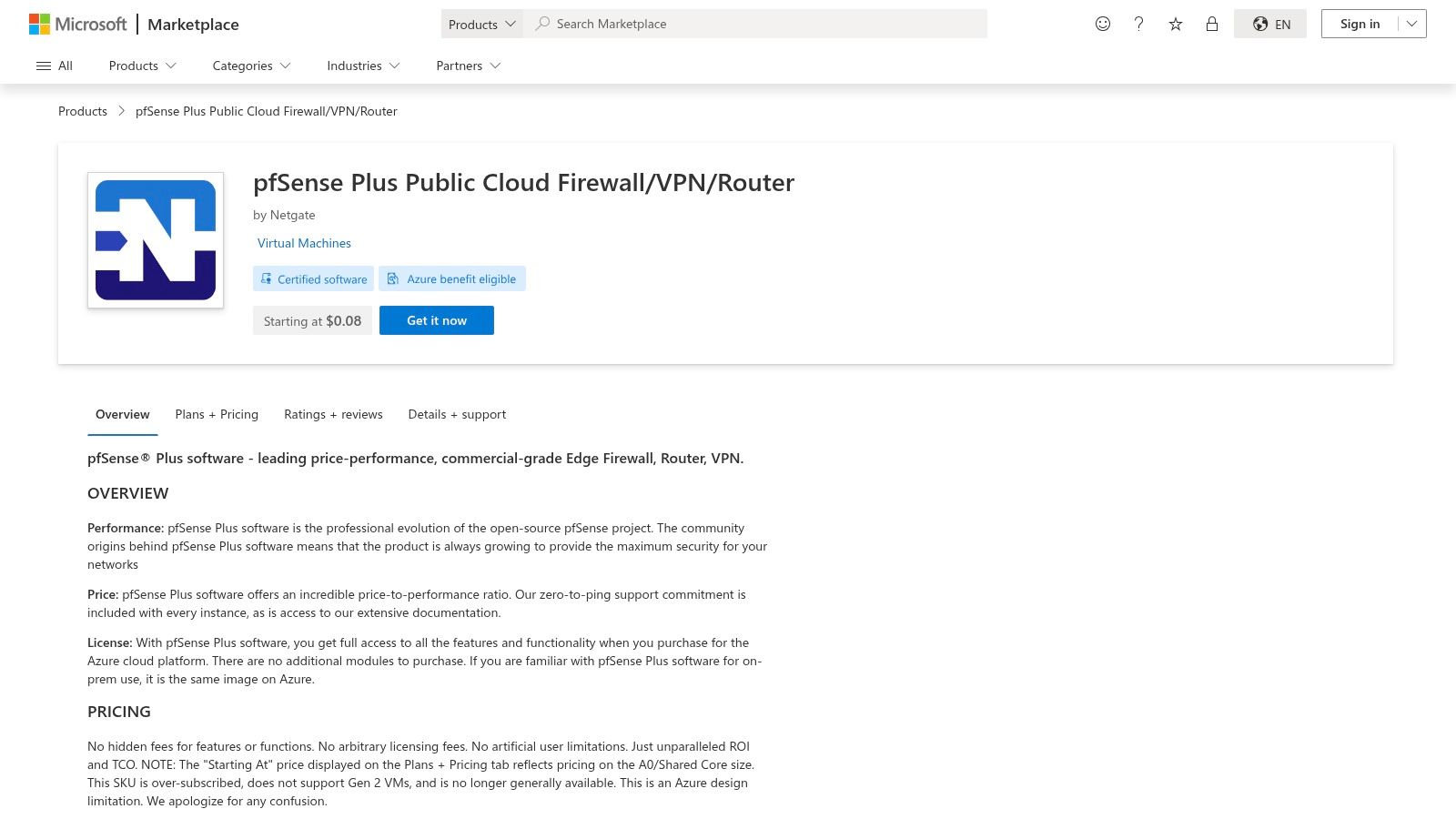
The primary advantage is convenience and integration. As a practical example, an IoT device manufacturer using Azure for its backend services could deploy a pfSense Plus instance directly from the Marketplace. This instance acts as a secure gateway, filtering all traffic to its cloud-based management platform and establishing robust site-to-site IPsec VPN tunnels back to its on-premises development network. The platform offers well-documented deployment guides and a 30-day trial option, allowing teams to conduct a proof-of-concept before committing.
While the software itself has a fee, it’s crucial to remember that the underlying Azure infrastructure costs are billed separately. Careful selection of the virtual machine SKU is important; the documentation notes potential performance quirks with smaller, shared-core instances, so choosing an appropriate VM size is key to a successful deployment. This Marketplace offering provides a straightforward, enterprise-ready way to leverage pfSense Plus’s power within a major public cloud environment, complete with optional professional support plans from Netgate.
7. IPFire
IPFire is a hardened, open-source firewall distribution built on a Linux foundation. It is designed with security as a primary focus, offering a straightforward web-based user interface that makes network administration accessible. The platform excels at network segmentation, providing clear separation for different zones like green (trusted LAN), red (untrusted internet), blue (wireless), and orange (DMZ), which is ideal for small businesses and home labs seeking granular control.
Its core features include stateful packet inspection, an intrusion detection/prevention system (IDS/IPS), and VPN support. What sets this firewall open source solution apart is its regular “Core Update” release cycle, ensuring the underlying system and security components are consistently patched and maintained. For a practical example, a small business can use IPFire’s zone-based system to easily create a DMZ in the orange zone for their public-facing web server, isolating it from their internal office network in the green zone. This ensures that even if the web server is compromised, the attacker cannot immediately access internal company data. The simple Pakfire package manager handles all updates.
While IPFire’s community support is active and helpful, its commercial support ecosystem is smaller than that of giants like pfSense or OPNsense. The development team’s security-first approach is evident in their code and update process, which can be further validated using tools discussed in articles about static code analysis to ensure software integrity. This makes IPFire a robust and reliable choice for users who prioritise security and simplicity over extensive third-party commercial add-ons.
Website: https://www.ipfire.org/
8. Endian Firewall Community
Endian Firewall Community (EFW) offers a comprehensive Unified Threat Management (UTM) experience, packaging a suite of security tools into a single, installable gateway solution. It provides a solid entry point for individuals and small organisations looking to deploy a feature-rich firewall without initial investment. The platform is designed to be an all-in-one security gateway, simplifying network protection by consolidating multiple functions.
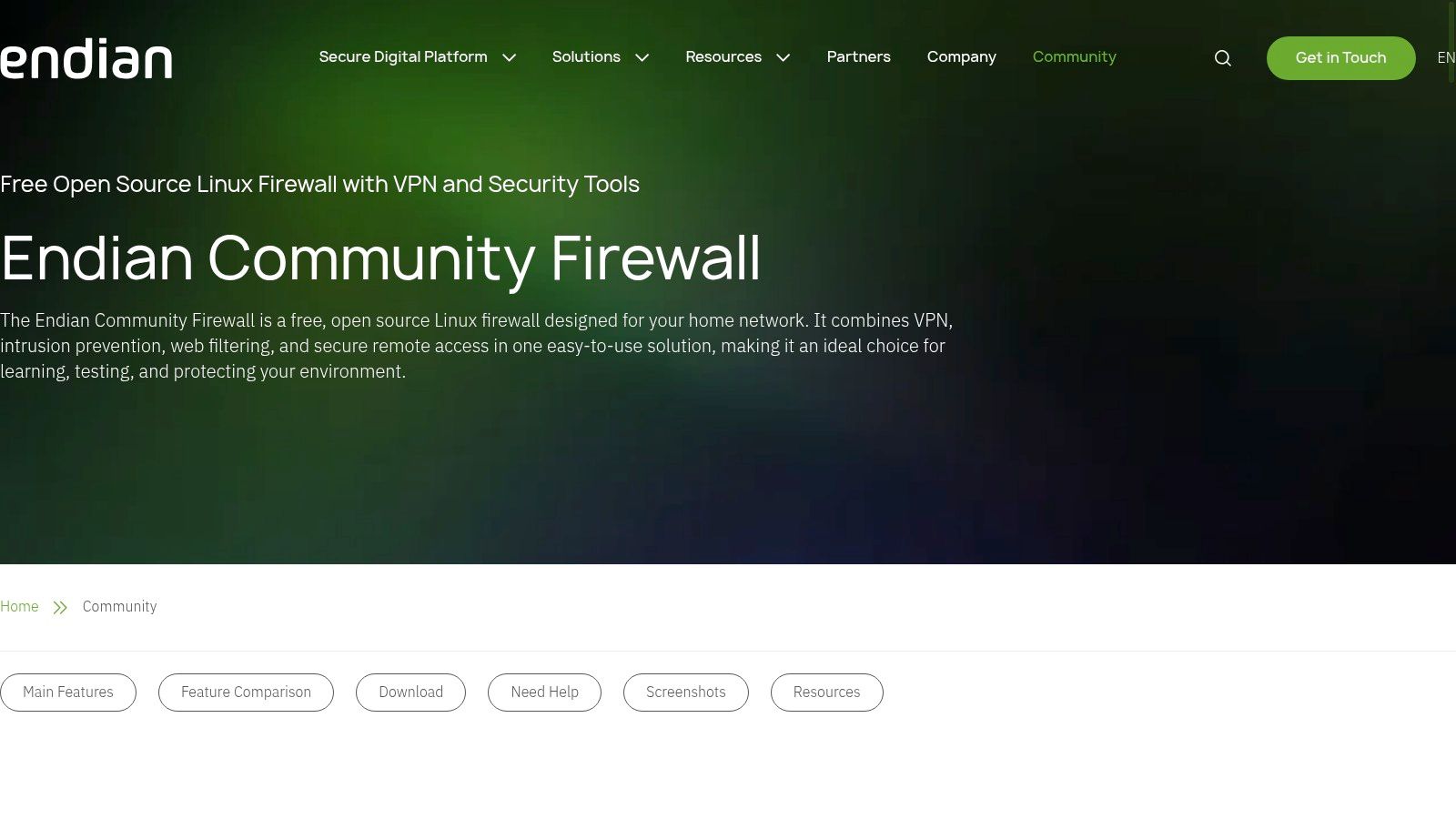
Its strength lies in its integrated UTM feature set, which includes a stateful firewall, web and email antivirus, anti-spam, intrusion prevention (IPS), and robust VPN capabilities (SSL and IPsec). This makes it a powerful firewall open source choice for those needing more than just basic packet filtering. As a practical example, a home lab user or a small startup could use EFW to secure their network, activate the content filter to block social media websites during work hours, and provide secure remote access for staff via its built-in OpenVPN server, all managed from one centralised interface.
While the community edition is free and highly capable for non-critical environments, it serves as a pathway to Endian’s commercial products. Official support, advanced features, and hardware appliances require a paid upgrade. This model allows users to test the platform’s core functionality extensively before committing to a commercial licence, making it an excellent learning tool or a proving ground for future enterprise deployments. Documentation and support are available through community forums.
Website: https://www.endian.com/community/
9. VyOS
VyOS is an open-source network operating system that unifies routing, firewall, and VPN functionalities into a single platform. It is designed for enterprise-grade deployments on bare metal servers, virtual machines, or cloud environments, offering a powerful, vendor-style Command Line Interface (CLI) that network professionals will find familiar. This makes it a robust choice for complex network architectures where advanced routing is as critical as security.

While the project is open source, VyOS operates on a subscription model for officially supported, pre-built images. This commercial approach provides predictable updates and professional support, making it a reliable firewall open source solution for businesses. As a practical example, a cloud service provider could use a subscribed VyOS image to build a high-availability virtual router and firewall appliance. They could use its CLI to configure complex BGP routing to peer with other networks while applying stateful firewall rules to protect their customers’ virtual machines, benefiting from official support and seamless cloud integration. Community “rolling release” builds are available for free but require more hands-on effort.
The primary strength of VyOS lies in its powerful routing capabilities combined with stateful firewalling. This is ideal for scenarios like building a border router that also needs to enforce complex access control lists or establishing a site-to-site VPN hub with dynamic routing protocols. The subscription model might be a drawback for hobbyists, but for commercial deployments requiring stability and support, it offers a clear and valuable pathway.
Website: https://vyos.io/subscriptions/on-premise
10. OpenWrt
OpenWrt is a highly versatile Linux distribution designed for embedded devices, most notably consumer-grade routers. It excels at transforming standard off-the-shelf hardware into powerful, customisable network devices. Its core strength lies in providing a stable, secure, and feature-rich operating system that replaces often-insecure and limited vendor firmware, offering a robust nftables-based firewall (fw4) managed through the clean LuCI web interface.
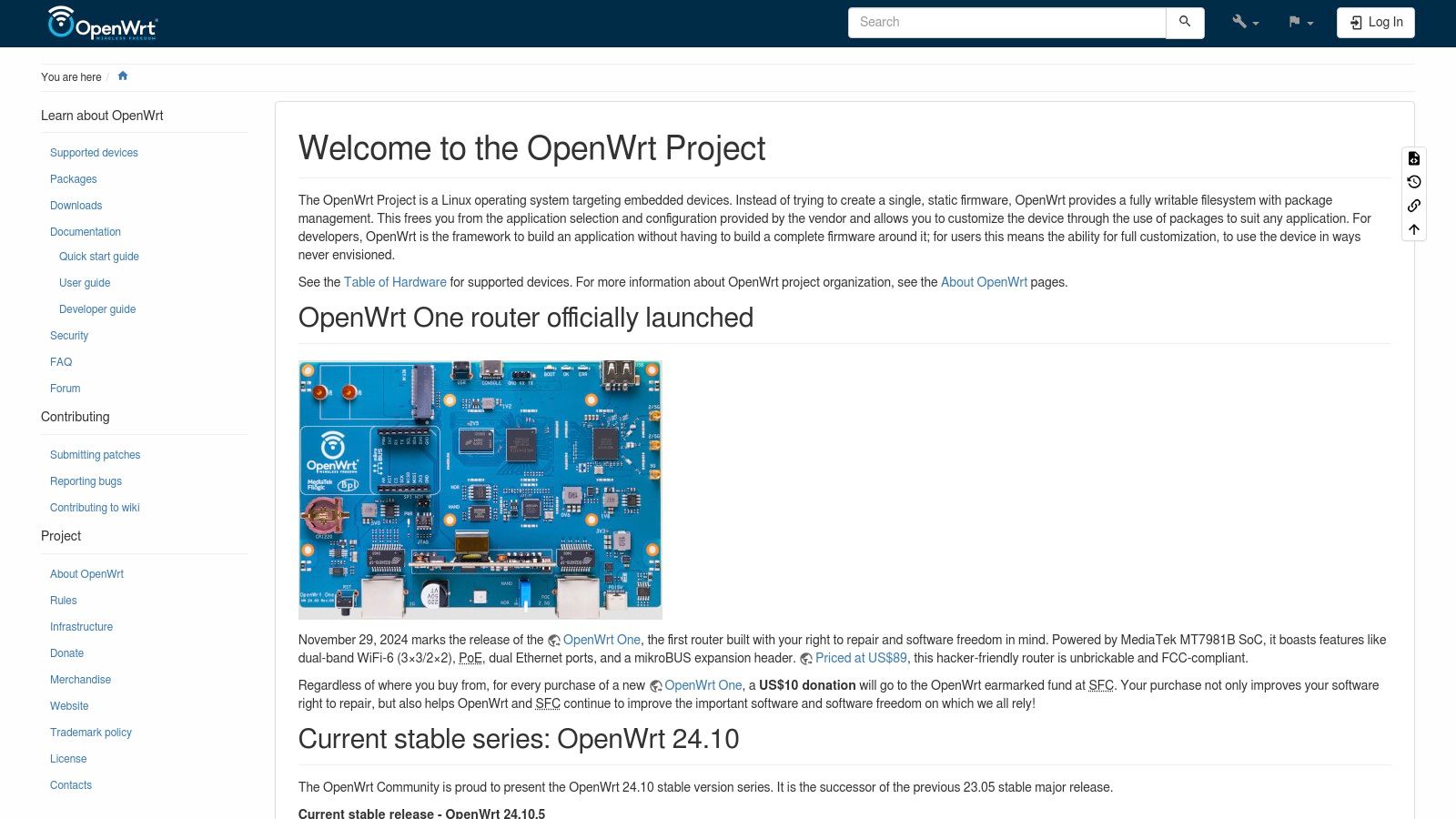
The primary appeal of OpenWrt as a firewall open source solution is its massive hardware compatibility, detailed in its “Table of Hardware”. This allows users to implement advanced network security on cost-effective hardware. For a practical example, a small business could flash OpenWrt onto several inexpensive routers to create segmented Wi-Fi networks for guests and internal staff. They could then apply different firewall rules to each, such as blocking guest devices from accessing internal file servers. Its extensive package repository allows for the installation of additional tools like ad-blocking, VPN clients (WireGuard, OpenVPN), and even intrusion detection systems.
However, the main limitation is the hardware itself. Performance is directly tied to the router’s CPU, RAM, and flash storage. Older or low-end devices, particularly those with 8 MB of flash or 64 MB of RAM, may struggle with modern releases and extensive packages. Users must carefully check the device’s specifications and compatibility before installation to ensure it meets their performance and feature requirements.
Website: https://openwrt.org/
11. Protectli
Protectli is not a software platform itself, but a highly regarded provider of hardware appliances specifically designed to run open-source firewall distributions. They offer a range of compact, fanless mini-PCs, known as ‘The Vault’, which are optimised for popular systems like OPNsense, pfSense, and Untangle. This specialisation makes them a go-to choice for users who want reliable, purpose-built hardware without the guesswork of sourcing and building a system from individual components.
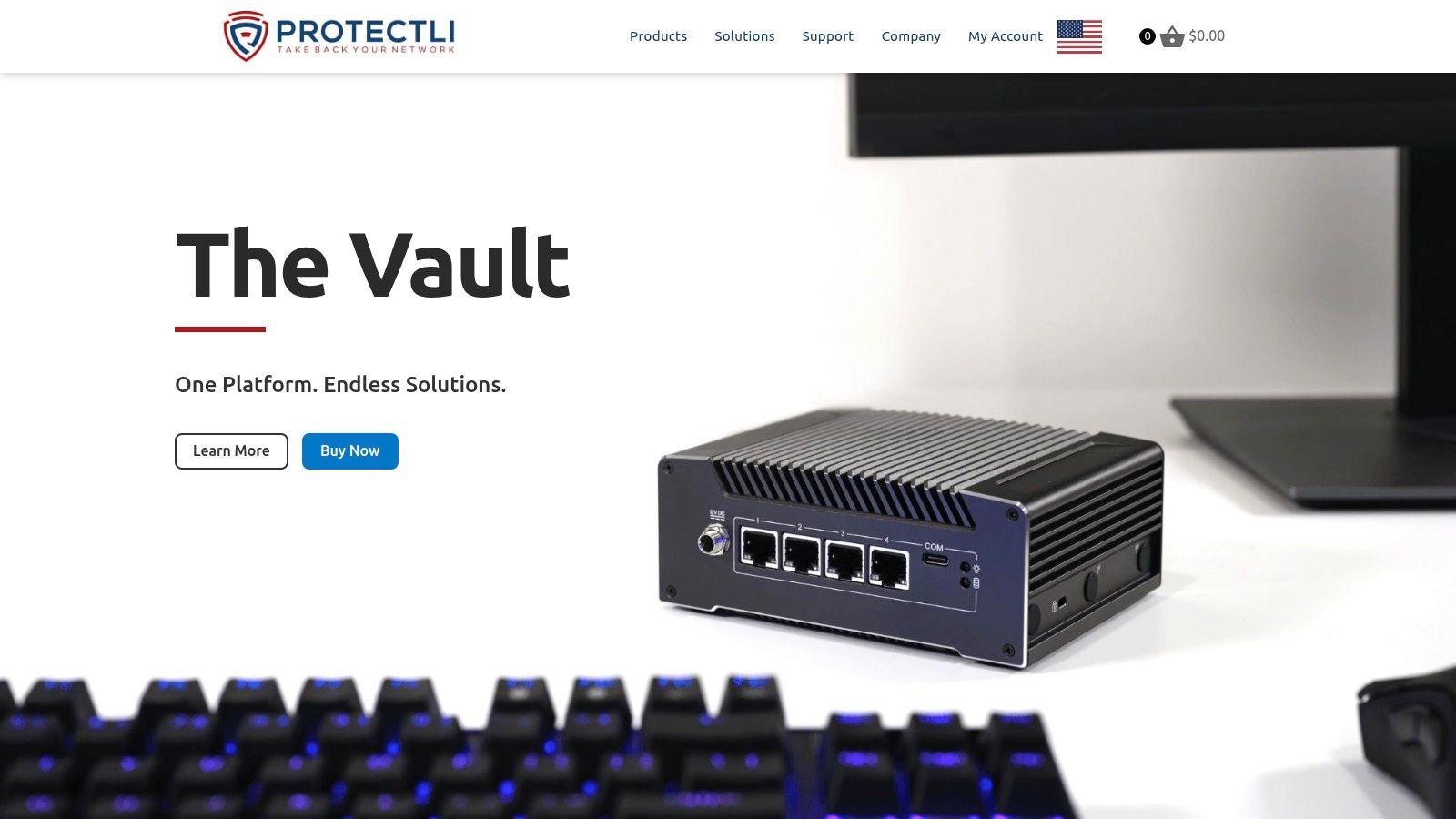
The primary advantage of Protectli is providing a stable, OS-agnostic foundation for your chosen firewall open source solution. Their devices come with multiple network interface configurations, ranging from 2-port to 6-port models with options for 2.5GbE and 10GbE SFP+, catering to both home lab enthusiasts and small to medium-sized businesses. As a practical example, a small business could purchase a 6-port Vault to run OPNsense, dedicating separate physical interfaces for their WAN, LAN, DMZ, guest Wi-Fi, and IoT networks, achieving robust physical network segmentation on a single, silent device.
While Protectli is based in the US, they offer worldwide shipping, including EU distribution options to streamline delivery. However, buyers in Spain and the EU should be mindful that orders shipped from the US may incur additional import duties and VAT. The company supports its hardware with a comprehensive online knowledge base, a 30-day money-back guarantee, and a two-year warranty, providing a solid and supported entry point into building a powerful open-source firewall appliance.
Website: https://protectli.com/
12. Micropyme
Micropyme is a specialised, Spain-based retailer that simplifies the procurement of professional firewall hardware for European businesses. It is an official distributor for both Netgate (pfSense Plus) and Deciso (OPNsense) appliances, making it a valuable one-stop shop for organisations in the EU looking to deploy a robust firewall open source solution on certified hardware. The platform’s primary advantage is streamlining logistics, offering EUR pricing, local Spanish-language support, and handling EU-specific invoicing and VAT, which can be a significant hurdle when ordering directly from non-EU vendors.
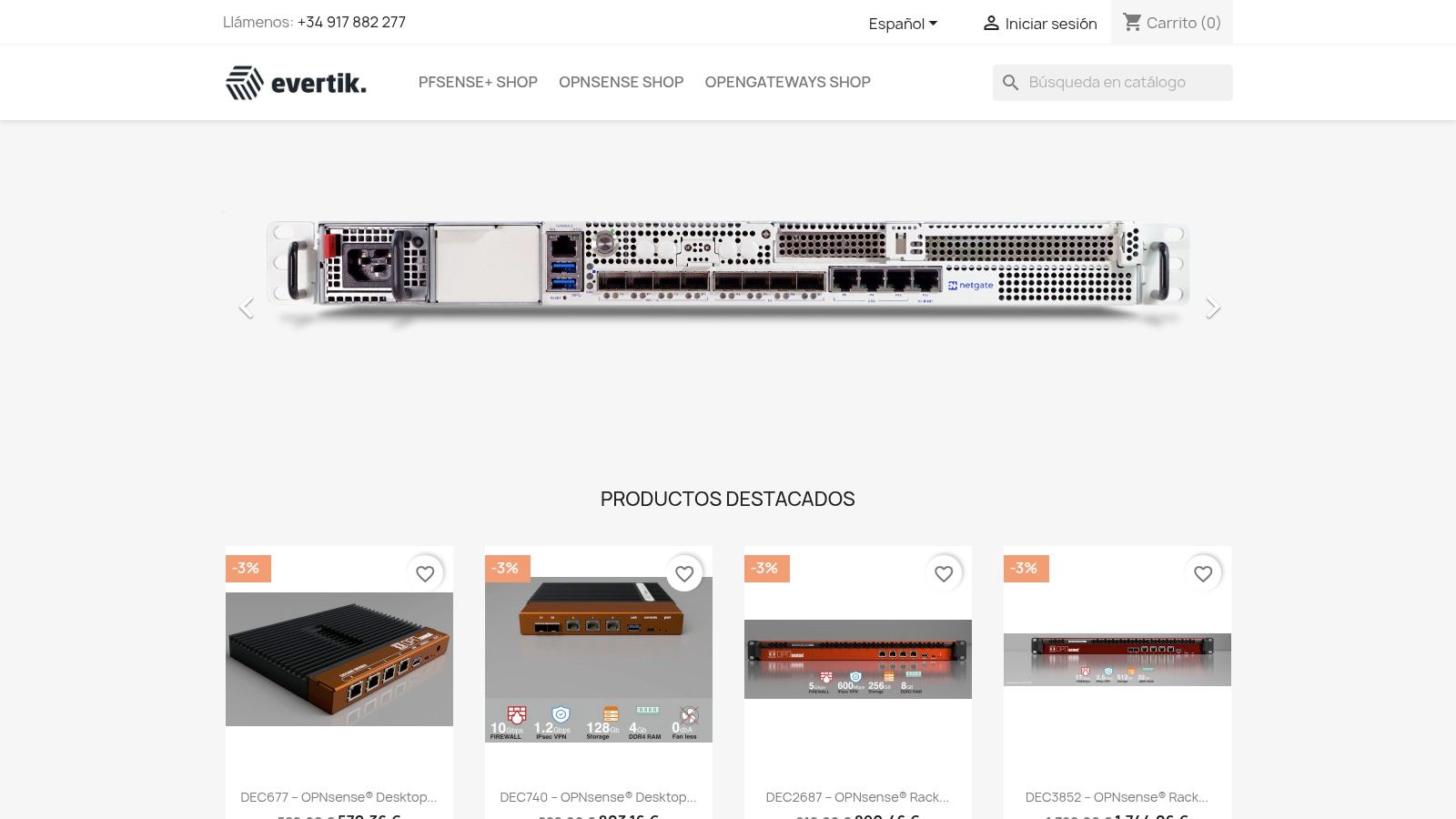
For a practical example, a manufacturer of IoT devices based in Spain can procure a Deciso appliance through Micropyme to get faster delivery, easier returns, and a clear invoice in Euros without customs complexities. They can then install OPNsense and use it as a lab firewall to test the network traffic of their new devices before shipping them to customers. The site offers official appliances and their own pre-installed ‘OpenGateways’ options, providing flexibility for different budgets and performance needs. This local focus is its key differentiator.
While Micropyme excels in convenience and local service, stock levels and promotional offers can fluctuate. The availability of specific business-tier bundles and their associated support terms are tied directly to the SKUs provided by Netgate and Deciso. Therefore, it is wise for buyers to verify current stock and terms before making large-scale deployment decisions based on the listed inventory.
Website: https://shop.micropyme.com/es/
Top 12 Open-Source Firewall Comparison
| Product | Core features | Target audience | UX & maintenance | Pricing & support | Unique selling point |
|---|---|---|---|---|---|
| OPNsense | Stateful firewall, VPN (IPsec/OpenVPN/WireGuard), IDS/IPS, plugin ecosystem | SMBs, enterprises, labs | Clean UI, frequent security updates, strong docs/community | Free (BSD); Business Edition for enterprise features | Transparent roadmap and large plugin ecosystem |
| OPNsense Official Shop (Deciso) | Purpose‑built desktop/rack appliances, Business Edition licenses, 2.5GbE/SFP+ options | EU buyers wanting turnkey hardware+software | Preconfigured hardware, EU fulfillment, 30‑day returns | Premium pricing vs generic appliances; official support bundles | EU‑made appliances optimized for OPNsense, VAT handling |
| pfSense Community Edition | Stateful firewall, VPN, routing, add‑on packages | SMBs, labs, users running on own hardware | Mature documentation, active community, installer images | Free CE; some workflows rely on Netgate tools | Large user base and extensive deployment guides |
| Netgate Store (pfSense Plus appliances) | Official Netgate SKUs with pfSense Plus preinstalled, accessories | Organizations needing turnkey appliances and TAC support | Turnkey devices, clear specs, global shipping/partners | Paid appliances; TAC Lite/Pro/Enterprise support tiers | Official hardware + pfSense Plus with vendor support |
| AWS Marketplace – pfSense Plus | AMI deployment, hourly software pricing, HA support, Graviton options | Cloud teams, fast PoCs, scalable workloads | Rapid deployment in EU regions, integrates with AWS services | Hourly software fees + separate infra/network costs | Pay‑as‑you‑go pfSense Plus for quick cloud launches |
| Microsoft Azure Marketplace – pfSense Plus | Azure VM image, VM‑sized pricing, Azure VNet/VPN docs | Azure customers needing prebuilt firewall image | Well‑documented Azure deployments, regional availability, trials | VM charges + software fee; SKU sizing matters | Azure‑optimized pfSense Plus with PoC/trial options |
| IPFire | Stateful inspection, IDS/IPS, VPN, QoS, logging/monitoring | SMBs, home labs focused on segmentation/usability | Easy web UI, regular core updates, community forum | Free OSS; smaller commercial support ecosystem | Security‑by‑design focus and strong segmentation tools |
| Endian Firewall Community | UTM features: firewall, VPN, antivirus, IPS, reporting | Home/lab users and UTM testers | Community docs/forums, demo UI, no SLA on community edition | Free community edition; paid commercial gateways/support | All‑in‑one UTM stack available in free community build |
| VyOS | Routing, firewall, VPN with vendor‑style CLI | Advanced routing, appliance‑grade and cloud deployments | Official subscription images available, active roadmap/blog | Community builds free; paid subscriptions for official images/support | Powerful routing features with predictable commercial subscriptions |
| OpenWrt | LuCI web UI, nftables firewall, rich package repo, wide device support | Consumer/embedded routers, tinkerers, DIY firewall projects | Active community, stable/snapshot releases, device‑dependent limits | Free OSS; performance depends on router SoC/RAM/flash | Huge device ecosystem to repurpose consumer routers |
| Protectli | Fanless Vault mini‑PCs, multiple NICs, up to 10GbE SFP+ options | Users needing OS‑agnostic firewall hardware (pfSense/OPNsense/OpenWrt) | Knowledge base, setup guides, 2‑year warranty, worldwide shipping | Paid hardware; EU buyers may face import duties/VAT | Popular, compact appliances optimized for firewall OSes |
| Micropyme | Spain/EU distribution of Netgate & Deciso appliances, pre‑installed options | Spanish/EU procurement teams and resellers | EUR pricing, Spanish support, local invoicing and fast EU delivery | Retail pricing with local VAT handling; stock varies | Spain‑based seller that simplifies EU procurement, invoicing and returns |
Making Your Final Choice and Preparing for Compliance
Navigating the landscape of firewall open source solutions reveals a powerful and flexible array of tools, each suited to distinct organisational needs. From the feature-rich and user-friendly interface of OPNsense to the robust, enterprise-grade capabilities of pfSense Plus and the lean, customisable nature of OpenWrt for embedded systems, the right choice hinges entirely on your specific context. The journey from selection to deployment is a critical one, but the responsibility for security and regulatory adherence extends far beyond the initial setup.
Your final decision must be a strategic one, balancing immediate technical requirements with long-term operational and compliance obligations. As we have explored, a single solution rarely fits all scenarios. The key is to map your primary use case to the strengths of the platforms discussed.
A Practical Approach to Selection
To make an informed choice, consider these final guiding questions:
- What is your primary use case? A small office in Barcelona might find a pre-configured appliance from a local vendor like Micropyme running OPNsense to be the most efficient solution. In contrast, an IoT manufacturer developing a connected home device would likely favour the minimal footprint and high customisation of OpenWrt to embed directly into their product's firmware.
- What is your team's expertise? Platforms like IPFire and Endian offer straightforward graphical interfaces that lower the barrier to entry. Conversely, a solution like VyOS demands strong command-line and networking expertise but rewards that investment with exceptional performance and granular control for complex routing scenarios.
- What are your support and hardware requirements? For mission-critical deployments, relying on community forums may not be sufficient. Opting for commercial support through Netgate for pfSense Plus or Deciso for OPNsense, often paired with dedicated hardware like a Protectli appliance, provides a clear path for troubleshooting and guaranteed hardware compatibility.
Beyond Deployment: The Compliance Imperative
As regulations like the EU's Cyber Resilience Act (CRA) come into force, the long-term management of your chosen firewall open source solution becomes paramount. It is no longer enough to simply deploy a firewall; manufacturers and software providers must demonstrate a structured and auditable process for maintaining security. This involves documenting your security architecture, establishing a vulnerability disclosure policy, and ensuring you can deliver timely security updates.
For organisations targeting markets with stringent data protection standards, this extends to broader compliance frameworks. Integrating your network security strategy with certifications is often a commercial necessity. For teams needing to prove their security posture to customers and partners, understanding the path to compliance is crucial, and resources detailing how to achieve SOC 2 Certification can provide a clear roadmap for aligning technical controls with recognised security standards. By pairing a robust open-source firewall with a forward-looking compliance strategy, you build a secure, defensible, and market-ready product that inspires trust.
Ready to align your product's security with regulatory demands like the CRA? Regulus provides the essential platform to map requirements, manage your documentation, and streamline your vulnerability handling processes. Ensure your open-source choices are not just powerful, but also fully compliant by visiting Regulus today.


