
EU Cyber Resilience Act 🇪🇺 Compliance Software
Prepare your digital product for the EU Cyber Resilience Act with our Cyber Resilience Act Compliance Software. Identify applicability, classify your product, map requirements and generate the documentation you need to meet 2025–2027 deadlines.
Join Early Access — Save 20%
By submitting this form, you accept our Terms and acknowledge that Regulus will process your data to provide Early Access updates. For more details, see our Privacy Policy.

The Cyber Resilience Act will impact every digital product in the EU
The EU Cyber Resilience Act introduces mandatory cybersecurity requirements for any product with digital elements placed on the European market.
Manufacturers, importers and distributors of software, firmware, embedded systems and IoT devices must understand applicability, classification, technical documentation and vulnerability-handling obligations.
If you are planning your CRA strategy, read our Cyber Resilience Act compliance roadmap 2025–2027.
For additional background, you can read the official EU CRA page at the European Commission website.
A unified Cyber Resilience Act compliance platform
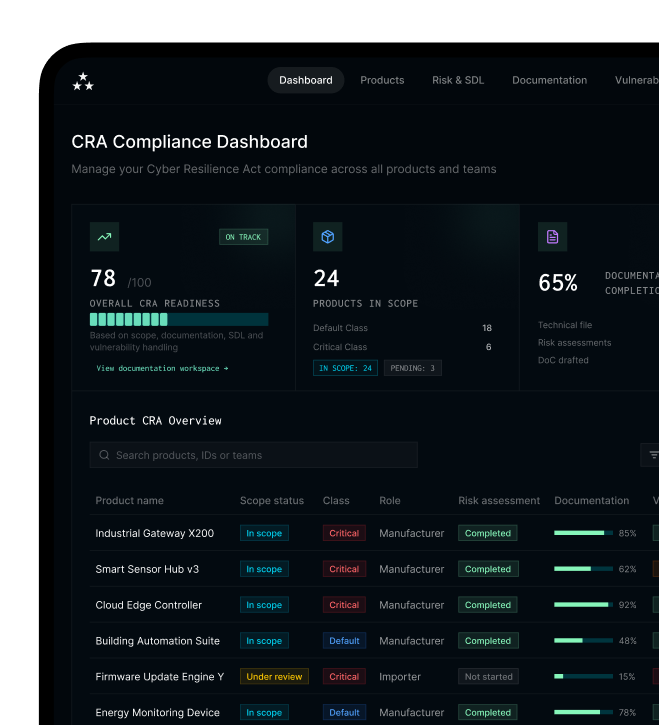
Regulus brings together the information, structure and documentation you need to prepare for the CRA — without relying on manual spreadsheets or costly consulting engagements.

CRA Applicability Checker
Identify whether the Cyber Resilience Act applies to your digital product and understand the factors that determine scope.

Product Classification
Determine whether your product falls under Default or Critical Class and clarify the obligations tied to your supply-chain role.

Requirements Matrix
Generate a complete list of CRA-aligned obligations based on your product profile, including security, updates and documentation needs.

Documentation Templates
Access the core technical files required under the CRA and structure the information needed for Annex II and Annex VII.

Vulnerability Management
Understand the vulnerability handling and reporting workflow defined by the CRA, from detection to coordinated disclosure.

Roadmap 2025–2027
Follow a clear, actionable timeline that outlines the steps required to prepare your product for upcoming CRA deadlines.
Cyber Resilience Act compliance in days — not weeks
1.
CRA Applicability Assessment
Identify applicability, product class and supply-chain role using a guided CRA workflow.
2.
Requirements Mapping
Get a tailored matrix of CRA obligations, including security requirements, updates, documentation and post-market surveillance.
3.
Compliance Plan
Follow a practical roadmap with documentation templates, evidence structure and recommended next steps for your team.
Simple, transparent pricing
Basic
1500 €
CRA applicability, classification and exportable report.
Pro
5500/year €
Full compliance roadmap, documentation and updates.
Enterprise
Custom
Multi-product support and dedicated compliance workspace.
Lastest articles
-
Shift to Left Security for EU CRA Compliance
To put it simply, shift to left is all about moving security…
-
Artefact vs Artifact A Guide for Technical and Compliance Teams
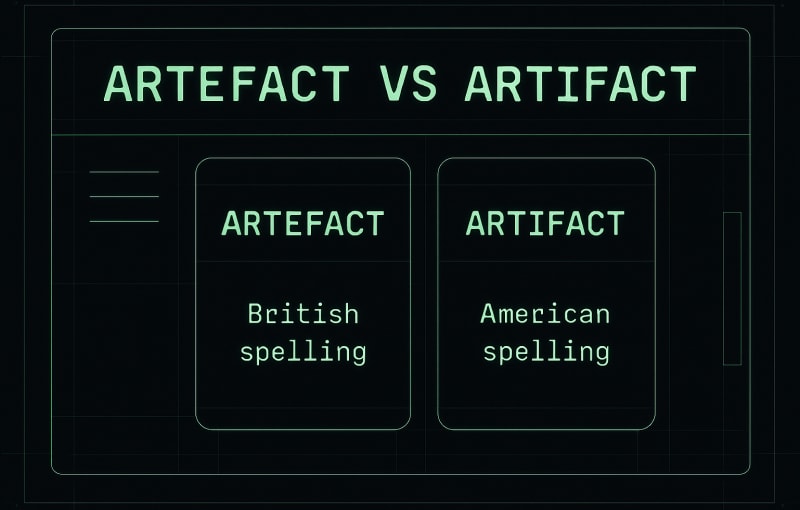
When it comes to artefact vs artifact, the core of the issue…
-
Master Terraform and Kubernetes with IaC for EKS, GKE, and AKS
When you bring Terraform and Kubernetes together, you create a single, declarative…


CRA Compliance
-
Cyber Resilience Act Compliance Roadmap 2025–2027: Complete Guide
This long-form guide provides a complete Cyber Resilience Act compliance roadmap for…
-
CRA Penalties and Enforcement: Complete Guide
CRA penalties can reach up to €15 million or 2.5% of global…
-
CRA Manufacturer, Importer and Distributor Obligations: Complete Guide
The Cyber Resilience Act introduces specific obligations for manufacturers, importers and distributors…
-
CRA Deadlines 2025–2027: Key Dates and What Manufacturers Must Do
Understand CRA deadlines 2025–2027. This guide explains the official Cyber Resilience Act…
CRA Requirements
-
CRA Secure Development Lifecycle (SDL): Practical Guide for Manufacturers
A practical guide to the CRA secure development lifecycle. Learn how SDL…
-
CRA Logging and Monitoring Requirements: Complete Guide
CRA logging and monitoring requirements help you detect incidents, investigate root causes…
-
CRA SBOM Requirements: Complete Guide for Manufacturers, IoT Vendors and Software Teams
CRA SBOM requirements make component transparency a compliance obligation. Learn what your…
-
CRA Update & Patch Management Requirements: Complete Guide for Manufacturers and Software Teams
CRA update and patch management requirements make secure updates and lifecycle support…
CRA Documentation
-
CRA Declaration of Conformity (DoC) Guide: How to Build a Compliant CRA DoC
A practical guide to the CRA Declaration of Conformity. Learn how to…
-
CRA Technical File Structure: Complete Guide for Cyber Resilience Act Compliance
A practical guide to CRA technical file structure. Learn how to organise…
-
CRA Technical Documentation (Annex II & VII): Complete Guide for Manufacturers, Software Teams and IoT Vendors
CRA technical documentation is the evidence package regulators can request at any…
Start your Cyber Resilience Act compliance today
Get clarity, reduce cost and prepare your digital product for EU regulatory deadlines. Regulus is a Cyber Resilience Act Compliance Software platform designed for digital product teams preparing for CRA requirements.
FAQs
What products fall under the Cyber Resilience Act?
Any product with digital elements placed on the EU market may fall under the CRA, including software, firmware, embedded systems, IoT devices and connected hardware.
Does the CRA apply to cloud-only or SaaS-only products?
Pure SaaS products without distributed components are generally outside the CRA scope. Products with installable software, firmware or connected hardware are typically included.
Who is responsible for CRA compliance?
Manufacturers have the main responsibility, but importers and distributors must also verify conformity and ensure compliant products reach the EU market.
What documentation does the CRA require?
The CRA requires technical documentation aligned with Annex II and Annex VII, including security measures, update processes, vulnerability handling and product information.
What are the CRA deadlines?
Core obligations enter into force gradually from 2025 to 2027. Companies must understand applicability, classification and documentation requirements ahead of these deadlines.